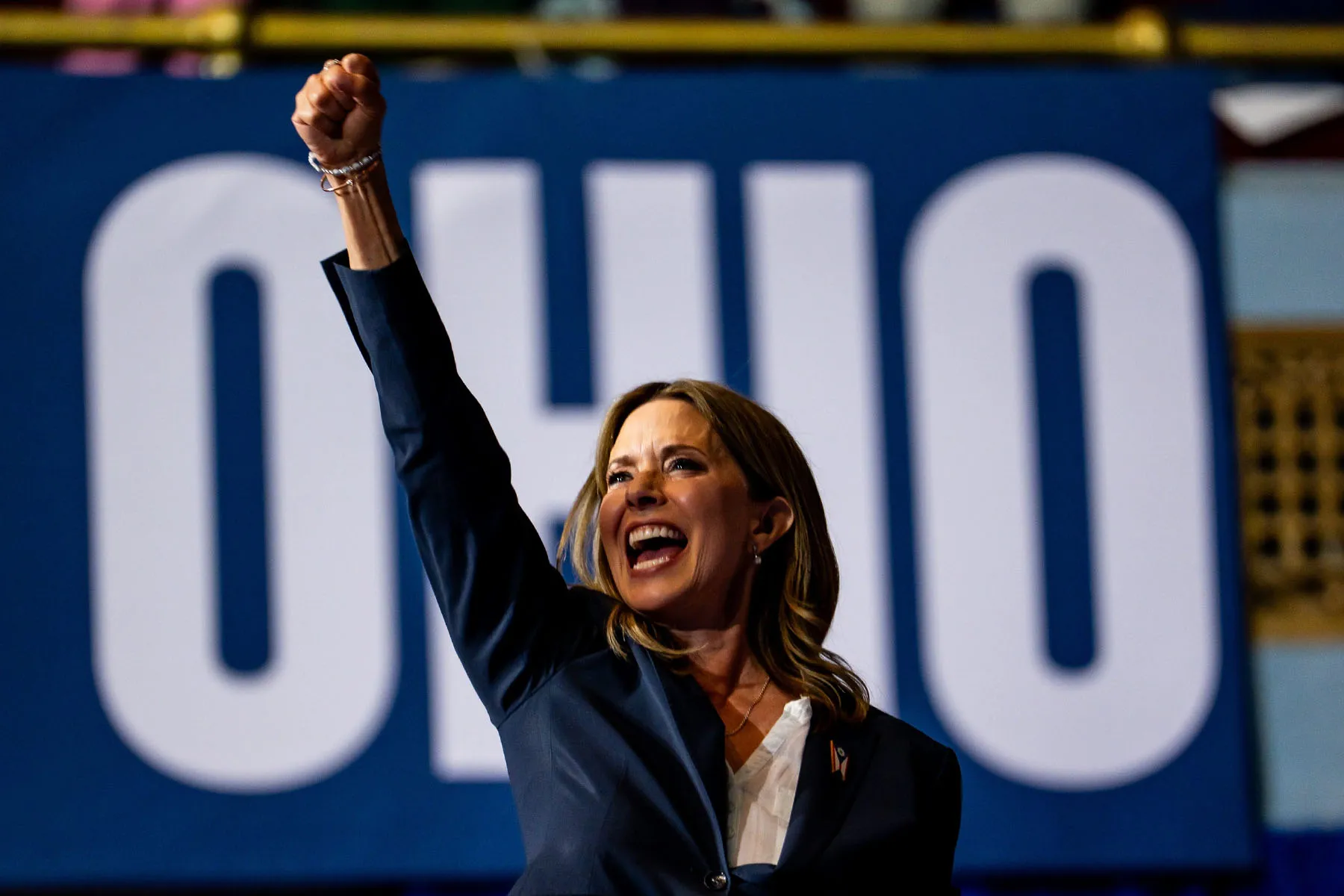
In a historic political shift for a state dominated by conservative leadership for two decades, Democrat Dr. Amy Acton has won the Ohio gubernatorial election, becoming the first woman ever elected to the state’s highest office. Acton, a physician and former public health official, prevailed over Republican candidate Vivek Ramaswamy following an increasingly contentious campaign season. The victory represents a major milestone for the state’s Democratic party in a region where Republicans have long held a firm grip on statewide executive offices and statehouse majorities.
Acton’s political background is rooted in public service rather than legislative experience. She previously served as the director of Ohio's public health department during the early months of the COVID-19 pandemic under outgoing Republican Governor Mike DeWine, gaining broad statewide recognition through regular television briefings. Her opponent, pharmaceutical entrepreneur Vivek Ramaswamy, entered the contest following a primary run in national politics and a career founding biotechnology ventures.
A Bitter Campaign and Personal Flashpoints
The gubernatorial race was defined by sharp personal contrasts and aggressive media campaigns. Both candidates operated without legislative voting records to defend, leading the public debate to focus heavily on personal backgrounds and character. In the final weeks of the race, the contest intensified dramatically when Ramaswamy aired a commercial featuring Acton’s estranged mother. The ad raised questions regarding Acton’s personal history and past accounts of childhood neglect and abuse. Official court records from 1978 confirm that Acton’s mother lost custody of her children following the indictment of her second husband for crimes committed against Acton when she was twelve years old.
The strategy produced strong reactions across the political spectrum. While some national figures defended the tactic as standard political conflict, several state leaders and political observers questioned the approach. Polling conducted in the final week of the campaign indicated that the controversy did not close the gap between the candidates, with Acton maintaining and slightly expanding her lead in the closing days. Voters across the state reacted strongly to the late-stage campaign dynamics.
"Screw you Vivek. Had you not gone full scumbag 2 weeks ago you may have had a chance. But thank you for reminding voters who you are inside."
Reflecting on the final leg of her campaign, Acton noted that she received a surge of public outreach at rallies and public appearances, pointing out that personal hardship is a shared reality for many families across the state.
Economic Priorities and Local Support
Beyond the personal disputes, the candidates staked out opposing views on economic policy, healthcare access, and regional development. Acton focused her platform heavily on working-class concerns and manufacturing communities, frequently campaigning in economically challenged industrial regions such as her hometown of Youngstown. Her strategy emphasized securing endorsements from trade unions and addressing basic living costs for residents.
For many voters, everyday financial pressure was a primary driver at the polls. The economic reality facing working families across Ohio remained a focal point throughout the election cycle.
"This is the first year I’ve visited a pantry more than a grocery store and that was humbling for me. And if a single person with no kids or disability is struggling, who isn’t struggling right now?"
Acton’s campaign relied on a broad coalition, bringing together traditional Democratic constituents and moderate voters. While some progressive voters expressed reservations regarding her broad-appeal strategy and quiet stance on certain social issues, support at the ballot box held firm behind the top of the ticket.
A Turning Point in State Politics
Acton’s election breaks a 20-year streak of Republican governors in Ohio. While Lieutenant Governor Nancy Hollister briefly assumed the governorship via succession 25 years ago following a gubernatorial resignation, Acton becomes the first female candidate in Ohio history to win the office by popular vote.
"Before tonight, more than half the states had never elected a woman as governor. I'm curious to see how that number has changes by the end of this election. Sounds like some glass ceilings are shattering tonight."
With the election decided, the focus shifts to the incoming administration’s ability to navigate a statehouse where opposing parties retain significant influence. Acton takes office with a mandate focused on economic stability, public health infrastructure, and affordability for working families across Ohio.

